A bathroom remodel lasts when the hidden parts are planned right before the tile, paint, and fixtures go in. Good framing, solid subfloors, proper waterproofing, smart ventilation, and careful plumbing choices help stop water from sneaking into places it should never go. If you want a bathroom that still looks good years later, the real work starts behind the walls.

A pretty bathroom can still fail
A bathroom can look sharp on day one and still be in trouble. That is the catch.
Tile is not what makes a bathroom waterproof. Grout is not a magic shield either. Water is patient. It finds gaps, weak seams, and soft spots. It creeps in like an uninvited guest and refuses to leave.
That is why bathroom remodel longevity depends on choices most people never see. The hidden work matters more than the shiny parts. A fancy faucet is nice. A dry wall cavity is nicer.
For remodel questions, Contact Us.
Start with the floor, because everything stands on it
Think of the bathroom floor like the frame of a pickup truck. If the base is weak, the rest takes a beating.
Before any finish goes down, the subfloor should be checked for sagging, rot, and past leaks. Even a small toilet leak can leave damage that spreads wider than expected. A soft spot near the tub or shower is a warning sign. If the floor flexes too much, tile can crack and grout can break loose.
A lasting remodel often includes these checks:
- Look for water stains around the toilet, tub, and shower
- Check for squeaks and bounce in the floor
- Replace damaged subfloor sections
- Make sure the floor is flat enough for tile
- Add support where needed so movement stays low
In Dallas, many homes have gone through years of hot summers, sudden storms, and shifting soil. That movement can stress floors and joints. In older homes near East Dallas or Lake Highlands, we often see past patch jobs hiding bigger trouble below.
Framing matters more than most folks think
Walls and shower surrounds need solid backing. If studs are bowed, twisted, or out of line, tile can sit unevenly. That can lead to cracks, weak joints, and water getting where it should not.
Straight framing helps every step after it. Cement board sits better. Waterproofing layers bond better. Tile lines look cleaner. Doors fit right. The room feels solid.
This is not flashy work. Nobody posts a picture of perfectly corrected studs online. Still, this is the kind of work that keeps a bathroom from aging before its time.
Learn more or Contact Us if you are planning a remodel.
Waterproofing is not optional
This is where many bathroom remodels win or lose.
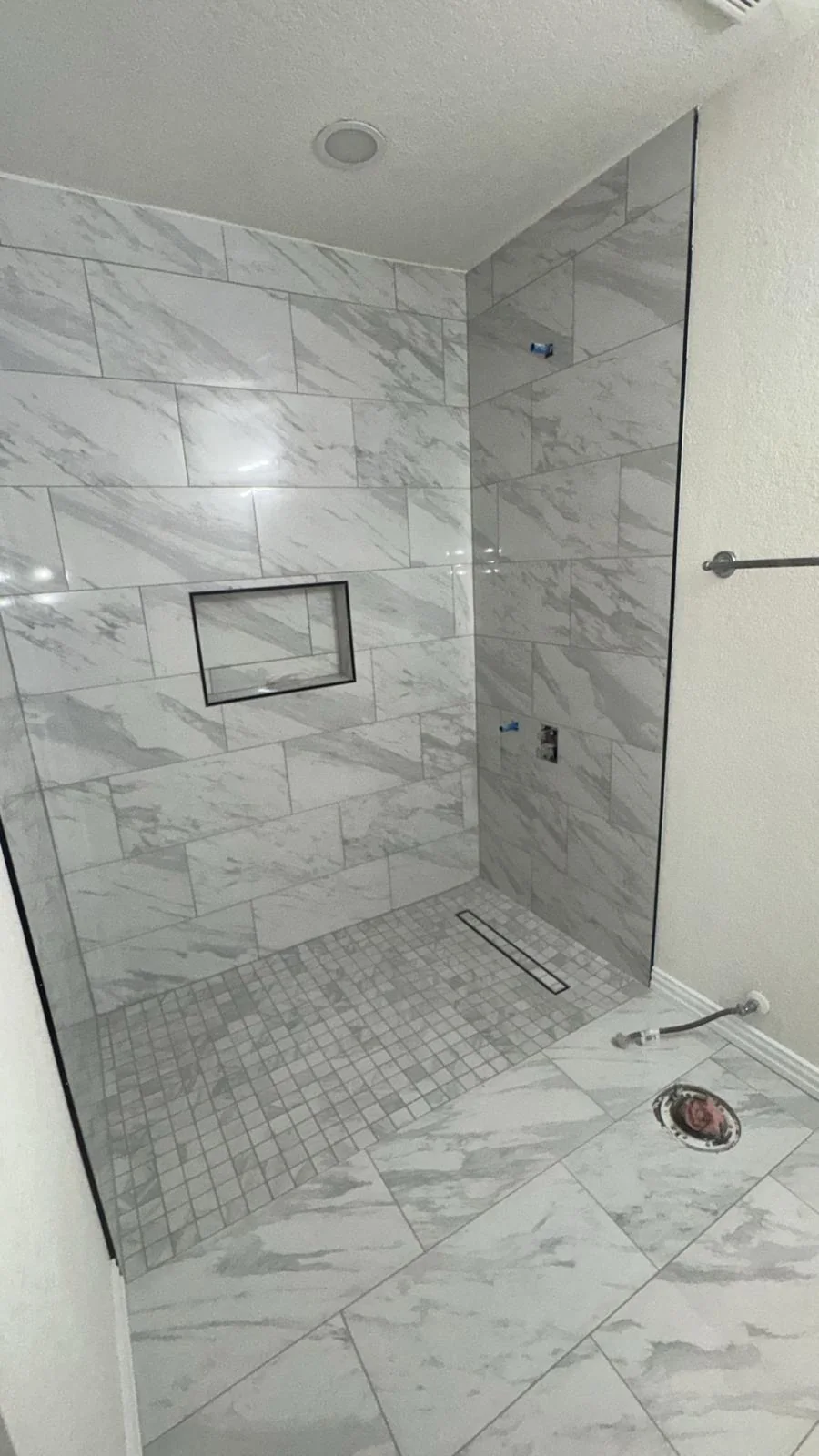
A shower should have a real waterproofing system behind the tile. Not just hope. Not just grout. Tile and grout shed some water, but they are not the final defense. Water can pass through them over time.
A lasting shower usually includes:
| Area | What helps it last |
|---|---|
| Shower walls | Waterproof membrane behind or on top of backer board |
| Shower pan | Proper slope toward drain, sealed corners, tested liner or system |
| Niches and benches | Full waterproofing at seams, corners, and fastener spots |
| Tub surround | Moisture-safe backing and sealed transitions |
| Bathroom floor | Water-resistant underlayment in wet zones |
Corners, niches, benches, and curbs are common weak spots. These areas need extra care. A shower bench may look like a luxury feature, but if it is not waterproofed right, it can act like a sponge in boots.
Risk note, wet areas near outlets and lighting should be handled by trained pros. Water and wiring are bad dance partners.
For general safety information, see OSHA.
Plumbing choices can save years of trouble
Behind the wall plumbing needs careful planning. A tiny drip inside a wall can cause major damage long before it shows on the surface.
Smart plumbing choices include:
- Replacing old shut-off valves during the remodel
- Checking drain slope so water clears well
- Making sure supply lines are secure and not under strain
- Setting the shower valve at the right depth
- Using access points when a layout makes sense
Pipe location matters too. In exterior walls, temperature swings can stress plumbing parts. Dallas weather is known for heat that bakes homes for months, then a cold snap that catches everyone off guard. Bathrooms need plumbing plans that account for both.
If a remodel changes the shower size, tub location, or vanity wall, this is the time to fix old plumbing issues. Waiting is like hearing a rattle in your truck and turning up the radio.
Ventilation does heavy lifting every day
Most people notice a fan only when it is loud. They should notice when it works.
Bathrooms make steam fast. Showers, baths, and even a sink full of hot water can send moisture into the air. Without proper ventilation, that moisture sticks around. Paint peels. Caulk gets tired. Mold can show up in corners and ceilings.
A good exhaust fan should be sized for the room and vented out of the house, not into an attic. That last part matters. Dumping moist air into the attic just moves the problem upstairs.
Humidity can linger in Dallas homes, especially after long hot spells and summer storms. If a bathroom has poor air flow, moisture hangs around longer. That adds stress to finishes and framing.
What we usually see in Dallas, TX:
- Older bathrooms with weak fans or no fan at all
- Shower walls tiled over poor backing
- Toilet flanges set too low after a floor update
- Caulk failures around tubs near exterior walls
- Hidden water damage under floors in slab and pier-and-beam homes
You can also review background information on indoor moisture at Wikipedia.
The shower pan is small, but it carries a big job
A shower pan has one mission, guide water to the drain and keep it out of the structure. If the pan is flat, poorly sealed, or built with weak corners, leaks can start slowly and spread quietly.
The slope matters. The drain connection matters. The curb matters. Every layer matters.
This is one of those places where “good enough” is not good enough. If the shower floor holds water, smells musty, or feels wrong underfoot, that is a red flag.
If you need help reviewing your options, Contact Us.
Materials behind the finish matter
Drywall has its place. Inside a shower is not that place.
Bathrooms need moisture-tough materials in wet zones. Cement board, foam backer systems, and proper membranes are common choices. Around the room, the right paint and trim also help. A bathroom is a small room with a lot of steam. It works hard every day.
Even fasteners matter. Wrong screws can rust. Weak joint treatment can fail. Gaps around penetrations can let moisture pass through.
Little choices stack up. Like lug nuts on a wheel, each one looks small until one is missing.
Layout decisions affect wear and tear
A bathroom that lasts is not just sealed well. It also works well.
If a shower sprays right at the door, water will keep testing that edge. If the vanity is squeezed too tight to the toilet, cleaning gets harder and mess builds up. If towels have no good place to hang, damp fabric ends up where it should not.
Good layout helps reduce daily stress on the room. It keeps water in the wet zones and helps surfaces dry faster. It also makes cleaning easier, which is half the battle.
In homes near Preston Hollow and around North Dallas, larger primary baths often have room for better spacing. In smaller older homes, smart layout matters even more because every inch has to pull its weight.
Watch these clues before a small issue grows
If you spot a problem early, you can often stop bigger damage.
- If grout keeps cracking in the same spot, then check for floor or wall movement
- If paint peels on the ceiling, then inspect the fan and moisture buildup
- If the shower smells musty, then check the pan slope, corners, and hidden damp spots
- If caulk keeps failing, then look for movement, poor prep, or trapped moisture
- If tile sounds hollow, then inspect bonding and moisture behind the surface
- If the floor feels soft near the tub or toilet, then check for active leaks and subfloor damage
- If mirrors stay fogged long after a shower, then the fan may be too weak or poorly vented
A few common claims, and what is really true
Myth, tile makes a shower waterproof.
Fact, the waterproof layer sits behind or under the tile system.
Myth, a stronger fan just means more noise.
Fact, the right fan removes moisture faster and can be quiet.
Myth, grout sealer fixes all water issues.
Fact, sealer helps with staining, but it does not replace real waterproofing.
Myth, small leaks are no big deal.
Fact, small leaks often hide for a long time and damage wood, drywall, and finishes.
Daily use and Dallas weather both matter
Bathrooms do not wear out from one dramatic event most of the time. They wear out from repeat exposure.
Hot weather can raise indoor humidity. Rainy periods add moisture to the air. Cold snaps can stress seals and plumbing parts. Over time, small weak points get tested again and again.
That is why hidden choices matter so much. A bathroom should be built for real life. Wet towels. Long showers. Kids splashing. A rushed weekday morning. That is the true job site.
Care plan that helps the room last longer
You do not need a giant chore chart on the fridge. Just a simple routine.
Weekly
- Run the fan during showers and for a bit after
- Wipe standing water off shower glass, benches, and corners
- Look for fresh drips under the sink and around the toilet base
Monthly
- Check caulk lines for gaps or peeling
- Clean the exhaust fan cover so air can move well
- Scan grout and tile for cracks or loose spots
Yearly
- Inspect plumbing connections and shut-off valves
- Check the ceiling and trim for moisture stains
- Re-caulk spots that show wear
- Have any odd smells, soft spots, or repeat cracks checked
A few minutes now can save a long headache later.
FAQs
How long should a bathroom remodel last?
A well-built bathroom can last many years. The finish materials may age at different speeds, but the hidden structure and waterproofing should hold up when done right.
What causes bathroom remodels to fail early?
Poor waterproofing, weak ventilation, bad subfloors, plumbing leaks, and movement in walls or floors are common causes.
Is grout enough to stop water in a shower?
No. Grout is part of the finish. A shower needs a proper waterproof layer behind or under the tile system.
Do I need an exhaust fan if I have a window?
A window helps, but it often is not enough. A fan removes moist air more reliably, especially during humid weather.
What is the first sign of hidden water damage?
Soft flooring, peeling paint, musty smells, stained trim, and repeating caulk or grout failure are common clues.
Does Dallas weather affect bathrooms?
Yes. Heat, humidity, storms, and sudden cold snaps can stress materials and raise indoor moisture. Bathrooms need solid ventilation and moisture control.
Should old plumbing be replaced during a remodel?
If plumbing is aging, leaking, or being moved, replacing key parts during the remodel can help prevent trouble later.
Are tile cracks always a tile problem?
Not always. Cracks can point to movement in the wall, floor, or subfloor below the tile.
If you want a bathroom built to last, Expert Home Remodelers can help with smart planning, solid waterproofing, reliable installation, and remodel work that protects your home for the long haul. Call (682) 458-3062 or visit https://experthomeremodelers.com/ to get started. You can also Contact Us.